
The Best Fluffy Pancakes recipe you will fall in love with. Full of tips and tricks to help you make the best pancakes.

California Roll Sushi Bowls with Spicy Mayo

A California roll sushi bowl provides a practical way to manage sushi cravings without the time-consuming process of rolling and slicing.
This deconstructed version focuses on the core flavors of the classic California roll: seasoned rice, tender crab, crisp cucumber, and creamy avocado, finished with a signature drizzle of spicy mayo.
Designed for an efficient lunch or a structured meal prep routine, the recipe yields five servings and takes approximately 40 minutes from start to finish.

Ingredients for California Roll Sushi Bowls
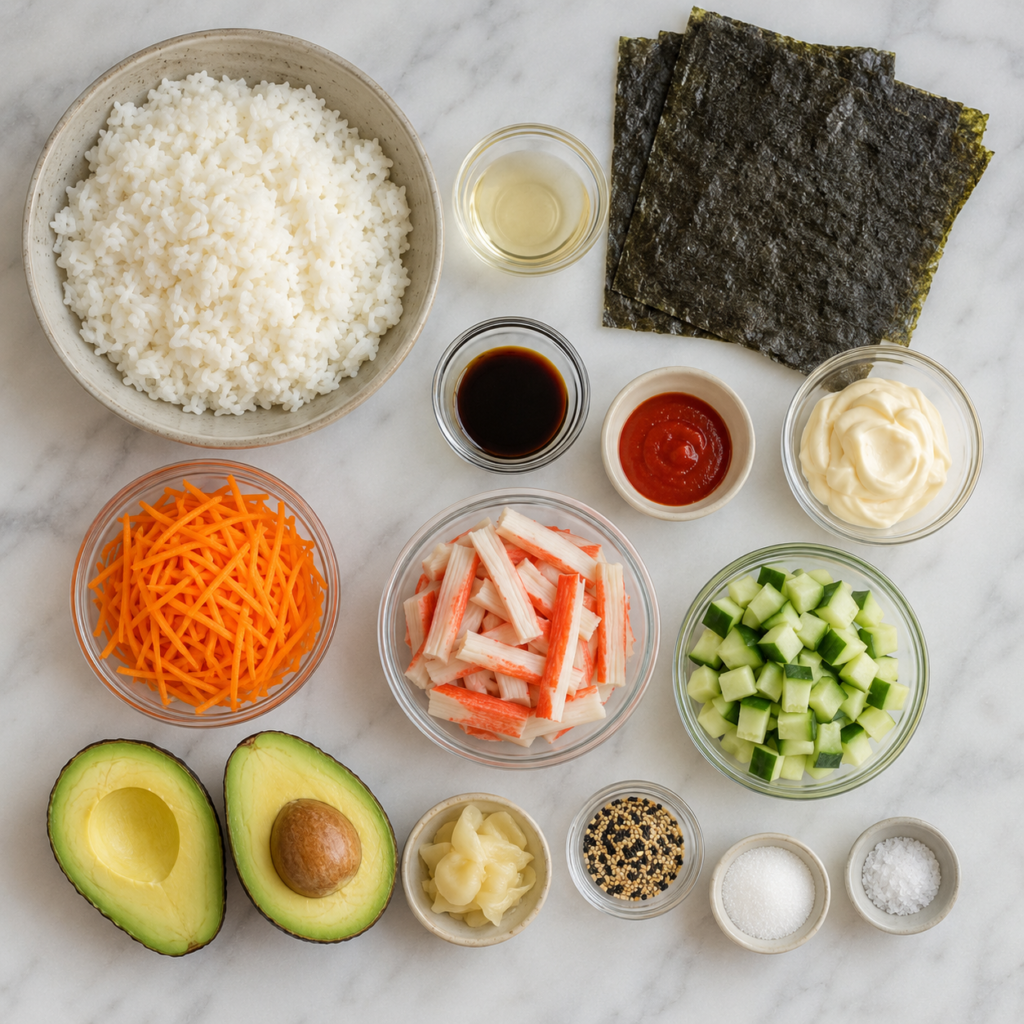
The ingredients for these California roll sushi bowls are divided into four functional categories: the rice base, the protein, the fresh toppings, and the two finishing sauces.
The Rice Foundation
- Sushi Rice or Calrose Rice: These short-grain varieties provide the necessary stickiness for a sushi-style bowl.
- Seasoning: Rice vinegar, white sugar, and salt are heated and tossed with the hot rice to create the traditional “sushi rice” flavor profile.
The Protein and Toppings
- Crab: The recipe supports both imitation crab (the traditional California roll choice) or lump crabmeat.
- English Cucumber: Sliced into bite-sized pieces, this provides a clean, watery crunch.
- Matchstick Carrots: These add structural crunch and color.
- Aromatics and Finishers: Nori (dried seaweed), pickled sushi ginger, diced avocado, and a garnish of black and toasted sesame seeds.
The Finishing Sauces
- Spicy Mayo: A whisked mixture of mayonnaise and sriracha.
- Soy-Vinegar Sauce: A simple, savory blend of low-sodium soy sauce and rice vinegar.
How to Make the Sushi Bowls
The first step is preparing the rice. Rinse your sushi rice or calrose rice under cold water until the water runs clear; this removes excess starch and prevents the rice from becoming gummy. Cook according to your preferred method. While the rice is still hot, heat a portion of the rice vinegar with sugar and salt until dissolved, then gently toss this seasoning into the cooked rice.
Next, prepare the two sauces. In one small bowl, mix the mayonnaise and sriracha to create the spicy mayo. In another, combine the low-sodium soy sauce with the remaining rice vinegar to create the soy-vinegar sauce. Set these aside while you prep the toppings.
For the assembly, you have a choice in how to handle the crab, cucumber, carrots, nori, ginger, and avocado. You can either toss them all together in one large bowl for a unified flavor or keep them separate. Divide the seasoned rice among five serving bowls, then add your crab and vegetable mixture. Just before serving, drizzle each bowl with the soy-vinegar topping and the spicy mayo. Finish with a sprinkle of black and toasted sesame seeds.
Tossed or Layered Bowl Style
The source recipe supports two different assembly methods, each offering its own benefits for a lunch bowl.
If you choose the tossed method, the imitation crab, cucumbers, and carrots are mixed thoroughly before they reach the bowl. This ensures that every forkful has a bit of everything, which is often easier for a quick desk lunch. However, note that once tossed, the nori can lose its crispness more quickly as it absorbs moisture from the vegetables.
Alternatively, the layered style involves placing the seasoned rice at the bottom and arranging the crab and vegetables in distinct sections on top. This deconstructed approach is excellent for visual appeal and allows you to control the exact bite.
Layering also helps keep the ingredients fresh for a slightly longer period if you aren’t eating the bowl immediately. When you use a layered assembly, you might find similarities to other organized meals like taco meal prep bowls, where the separation of wet and dry components is a key part of the serving logic.
Seasoned Rice Builds the Base
The most significant difference between a standard grain bowl and a deconstructed sushi bowl is the treatment of the rice. Plain white rice will result in a bowl that feels disconnected; the seasoning is what makes it “sushi.”
By heating the rice vinegar, sugar, and salt, you create a seasoned syrup that coats each grain of rice. This gives the base of the bowl that familiar tangy, slightly sweet, and salty flavor found in a restaurant-quality California roll. It is essential to use either sushi rice or calrose rice for this recipe.
These varieties contain the right amount of starch to stay tender and slightly clumpy, which creates the correct mouthfeel when paired with the creamy avocado and spicy mayo. If you frequently use rice as your meal prep base, you might see how this seasoned approach differs from the savory, unseasoned bases used in many chicken rice bowls.
Add Sauces at the End
Timing is everything when it comes to the two finishing mixtures used in this recipe. The spicy mayo provides the richness and heat, while the soy-vinegar sauce provides the salt and necessary acidity to cut through the mayonnaise.
Applying these sauces only at the point of consumption is a practical rule for maintaining the bowl’s texture. The rice vinegar in the soy mixture can cause the matchstick carrots and cucumbers to release water if they sit too long, resulting in a pool of liquid at the bottom of the bowl.
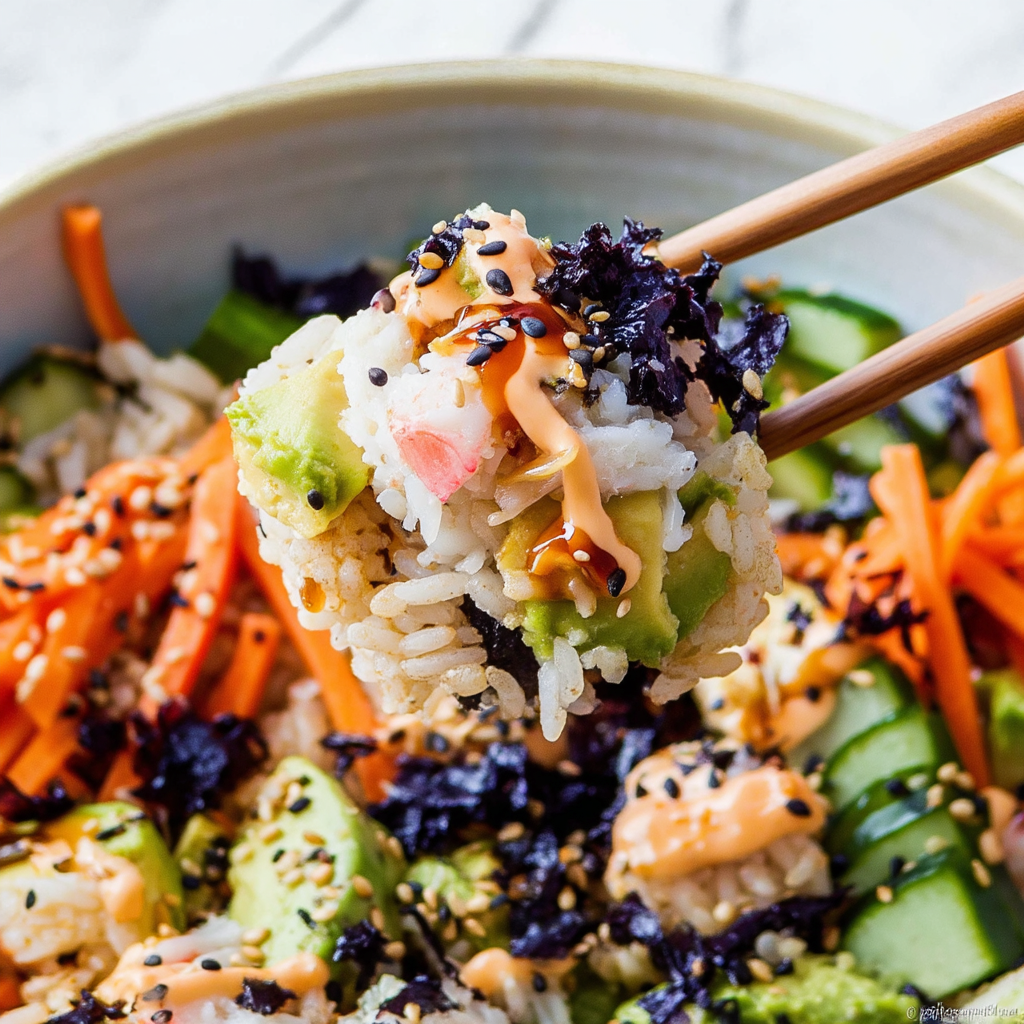
By waiting until you are ready to eat, you ensure the nori stays as crisp as possible and the spicy mayo remains a distinct drizzle rather than soaking into the rice entirely. This two-sauce finish is a crucial part of the California roll experience, as it mirrors the way the rolls are typically served with soy sauce for dipping and a spicy topping for garnish.
Freshness and Meal Prep Notes
While this recipe is a strong choice for those looking for a sushi-style lunch without the labor of rolling, the freshness of the ingredients dictates how you should handle storage. The source recipe card does not provide a specific storage duration, so a cautious approach is best.
The avocado is the most time-sensitive ingredient. Once diced, it begins to brown when exposed to air. If you are preparing these bowls ahead of time, it is highly recommended to wait and dice the avocado right before you eat. Similarly, you may want to keep the spicy mayo and the soy-vinegar sauce in small separate containers rather than adding them to the bowl hours in advance.
This deconstructed approach to meal prep keeping wet or delicate components separate is a common technique for maintaining quality in an assembly-style lunch bowl. Since the ingredients are fresh and some components like the crab are cold, there is no need for reheating instructions, and this bowl should always be served chilled or at room temperature.
FAQ
Can California roll sushi bowls be made ahead?
You can prep the rice and chop the vegetables in advance, but the bowl is best when assembled close to serving. Be especially careful with the avocado, which should be added at the last minute to prevent browning.
Should the ingredients be tossed together or layered?
Both methods work. Tossing the ingredients together ensures a consistent flavor in every bite, while layering them in sections makes for a more organized presentation and allows for better texture control over ingredients like nori.
Can you use imitation crab or lump crabmeat?
Yes, both are supported by this recipe. Imitation crab is the classic, more affordable ingredient often found in California rolls, while lump crabmeat offers a more traditional seafood profile.
Conclusion
California Roll Sushi Bowls with Spicy Mayo offer a manageable way to enjoy deconstructed sushi flavors in a practical bowl format. By focusing on properly seasoned sushi rice, fresh toppings like English cucumber and avocado, and the characteristic two-sauce finish, you can create a structured lunch that feels more interesting than a standard salad. The flexibility of tossed or layered assembly, combined with a focus on sauce timing, ensures a fresh, sushi-style experience without the need for a bamboo rolling mat.
Print
California Roll Sushi Bowls with Spicy Mayo
- Total Time: 40 minutes
- Yield: Servings: 5
Description
These California roll sushi bowls bring the familiar flavors of a California roll into an easy bowl format with seasoned rice, crab, cucumber, carrots, avocado, nori, soy-vinegar sauce, and spicy mayo. The toppings can be tossed together or arranged in sections over the rice.
Ingredients
- 2 cups dry sushi rice or calrose rice
- 5 tablespoons rice vinegar, divided
- 2 tablespoons granulated sugar
- 1/2 teaspoon salt
- 1/4 cup light mayonnaise or regular mayonnaise
- 1 1/2 tablespoons sriracha
- 1/4 cup low-sodium soy sauce
- 10 ounces imitation crab or lump crabmeat, torn or chopped into small bite-size pieces
- 1 1/2 cups diced English cucumber
- 3/4 cup roughly chopped matchstick carrots
- 1 nori sheet, chopped or crumbled into small pieces, plus more if desired
- 1 1/2 tablespoons chopped pickled sushi ginger
- 1 large avocado, peeled and diced
- Black and toasted sesame seeds, for garnish
Instructions
- Rinse and cook the sushi rice or calrose rice.
- In a small saucepan or microwave-safe bowl, heat part of the rice vinegar with the sugar and salt until the sugar and salt dissolve.
- Toss the seasoned vinegar mixture with the cooked rice.
- In a small bowl, mix the mayonnaise and sriracha until smooth.
- In another small bowl, mix the low-sodium soy sauce with the remaining rice vinegar.
- In a large bowl, gently toss together the crab, cucumber, carrots, nori, pickled sushi ginger, and avocado. For a sectioned bowl style, keep the ingredients separate instead.
- Divide the seasoned rice among 5 serving bowls.
- Add the crab mixture over the rice, or arrange the crab, cucumber, carrots, nori, ginger, and avocado in sections.
- Drizzle each bowl with the soy-vinegar mixture and spicy mayo.
- Garnish with black and toasted sesame seeds. Serve right away.
Notes
- This recipe is a simplified, deconstructed version of California roll flavors.
- The toppings can be tossed together or layered separately over the rice.
- Add the sauces after assembling the bowls so the toppings stay fresh and not overly wet.
- Use imitation crab or lump crabmeat, depending on preference.
- Avocado is best added close to serving because it can brown after cutting.
- Storage, reheating, and freezing instructions are not provided.
- Prep Time: 15 mins
- Cook Time: 25 mins
- Category: Lunch / Meal Prep


