
The Best Fluffy Pancakes recipe you will fall in love with. Full of tips and tricks to help you make the best pancakes.

Greek Pasta Salad with Steak and Feta

This Greek pasta salad with steak is a warm, savory lunch dish that departs from the traditional chilled pasta salad format.
By combining freshly seared rib-eye steak with whole wheat penne, sun-dried tomato pesto, and salty feta, you create a satisfying meal that focuses on depth of flavor and texture rather than a cold vinegar-based dressing.

It is an efficient 35-minute recipe that uses a single skillet for the protein and a pot for the pasta, making it a manageable option for a midday meal.
Ingredients for Steak Pasta Salad
The ingredient list for this recipe is designed to bridge the gap between a classic pasta dish and a Mediterranean-inspired salad. The use of whole wheat penne provides a sturdy, fiber-rich base that stands up well to the rich fat of the rib-eye steak. Rather than a separate vinaigrette, the moisture and seasoning come from a combination of butter, olive oil, and sun-dried tomato pesto.
- 8 ounces whole wheat penne pasta
- 2 tablespoons extra-virgin olive oil
- 2 tablespoons butter, divided
- 1 (1 pound) beef rib-eye steak
- ¼ cup chopped shallots
- 1 teaspoon minced garlic
- 1 tablespoon soy sauce
- 1 cup chopped fresh spinach
- ½ cup sun-dried tomato pesto
- ½ cup sliced black olives
- ½ cup crumbled feta cheese
- 3 tablespoons sunflower kernels
- 1 tablespoon chopped parsley
- 1 teaspoon basil
Whole wheat penne is the specific pasta base requested here, which offers a slightly nuttier flavor than white pasta. The rib-eye steak serves as the main protein, while the sunflower kernels add a distinct texture. For the mix-ins, the sun-dried tomato pesto provides a concentrated savory base that distributes evenly when tossed with the warm pasta.
How to Make It
To ensure the dish remains a warm pasta salad, timing is important. You want to keep the pasta warm while you finish the steak skillet steps. The entire process follows a logical flow: boiling the pasta, searing and slicing the steak, and finally combining everything off the heat to preserve the texture of the greens and cheese.
- Start by bringing a large pot of lightly salted water to a boil.
- Cook the whole wheat penne for 8 to 10 minutes, or until it reaches a tender yet firm texture.
- Drain the pasta, immediately toss it with the extra-virgin olive oil, and keep it warm.
- While the pasta is cooking, melt 1 tablespoon of butter in a skillet over medium-high heat.
- Place the rib-eye steak in the skillet and sear both sides until the center is rosy-pink, which usually takes 7 to 10 minutes depending on the steak’s thickness.
- Move the steak to a cutting board and slice it into bite-sized pieces.
- In the same skillet, melt the remaining 1 tablespoon of butter.
- Add the chopped shallots and minced garlic, cooking for only 5 to 10 seconds until they become fragrant.
- Return the steak pieces to the skillet and continue cooking until your preferred doneness is reached, usually about 5 more minutes.
- Stir in the soy sauce and cook for just 3 to 5 seconds until it has evaporated.
- Remove the skillet from the heat.
- Stir the chopped spinach, sun-dried tomato pesto, black olives, feta cheese, sunflower kernels, parsley, and basil into the steak mixture.
- Transfer this mixture to a large bowl, add the warm penne, and toss everything together before serving.
Why This Is Served Warm
One of the most important aspects of this recipe is that it is a steak pasta salad intended to be served warm. Unlike traditional Greek salads that rely on crisp, cold cucumbers and tomatoes, this version uses warm penne and freshly seared steak. Tossing the pasta in olive oil right after draining prevents it from sticking while keeping it at the right temperature for assembly.
The warmth from the steak and the pasta performs a specific role in the dish: it slightly wilts the fresh spinach and helps the sun-dried tomato pesto coat the penne effectively. If the dish were served cold, the butter and fats from the rib-eye would solidify, which would change the mouthfeel significantly. This method focuses on a lunch pasta salad that feels like a full meal rather than an appetizer or side dish.
Steak and Skillet Notes
The rib-eye steak is the centerpiece of this recipe, and the skillet method is designed to maximize its flavor. By searing the steak as a whole piece first, you develop a crust that you wouldn’t get if you started with small cubes. Slicing it after the initial sear and then returning it to the skillet allows the pieces to cook through evenly while making them the perfect size for a salad-style bite.
The division of butter is also a practical step. The first tablespoon handles the high-heat sear, while the second tablespoon is used to sauté the aromatics. Shallots and garlic are added at the very end to prevent burning, as they only need a few seconds in the hot butter to release their flavor. The addition of soy sauce is a brief but effective seasoning step, providing a salty depth that complements the beef before the skillet is removed from the heat.
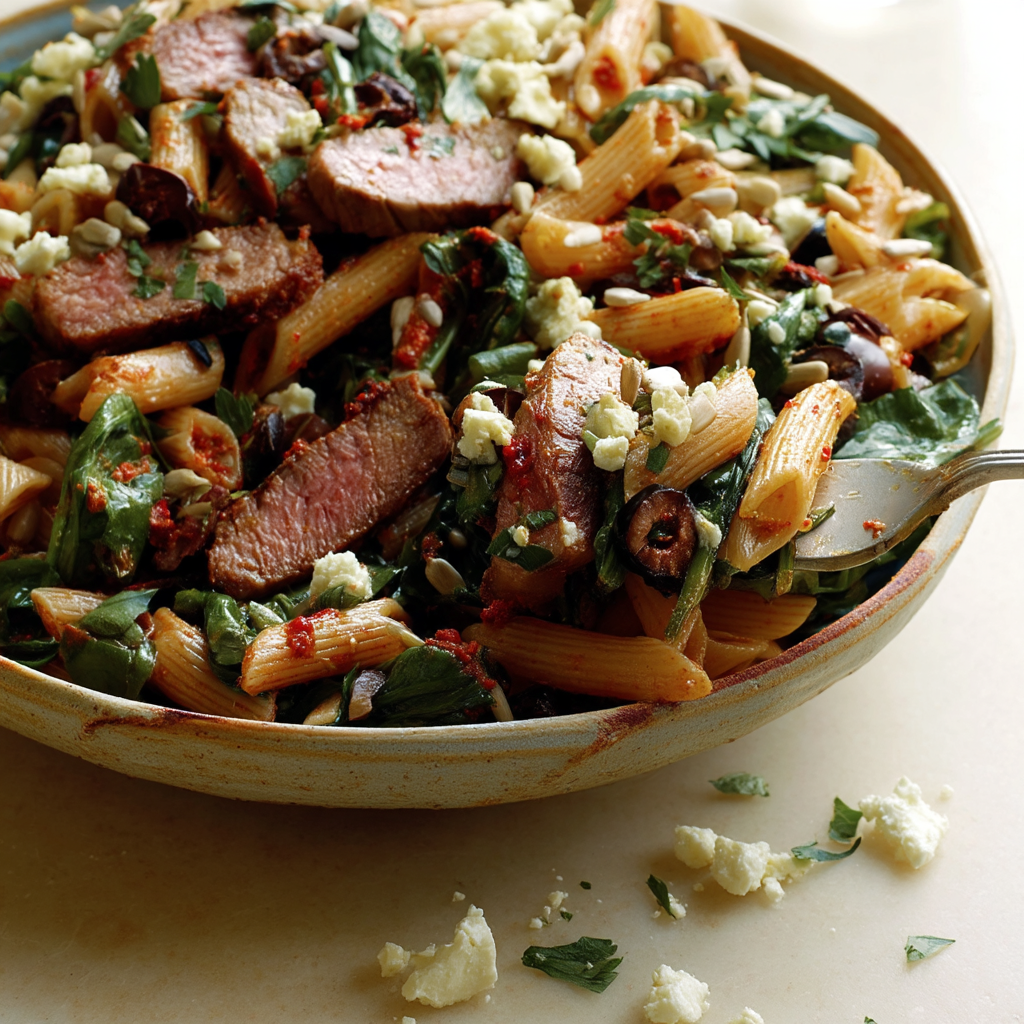
Adding the Mix-Ins
The final assembly happens off the heat, which is a method-focused choice. Adding the feta cheese, black olives, and spinach into the skillet after it has been removed from the burner prevents the cheese from melting completely and the spinach from overcooking into a mushy state. This preserves the individual textures of the ingredients.
Sun-dried tomato pesto acts as the primary flavor agent, tying the meat and pasta together. Similar to how a pesto pasta salad relies on the herb paste for cohesion, this recipe uses the concentrated tomato base to provide sweetness and acidity. The sunflower kernels and fresh herbs like parsley and basil are added at this stage to maintain their crunch and brightness. If you enjoy recipes that use fresh herbs as a main flavor component, you might also find a lemon herb pasta salad to be a useful reference for your weekly planning.
Freshness Notes
Because this is a warm-service dish, it is at its best immediately after tossing. The recipe logic focuses on the pasta being kept warm while the steak finishes, ensuring that everything is at an ideal temperature when it hits the bowl. The richness of the rib-eye and the feta cheese are most enjoyable before the dish cools down significantly.
If you are looking for a dairy-and-tomato-forward option served at different temperatures, you might compare this to a caprese pasta salad, though the warm steak here provides a much different experience. This recipe does not include specific storage or reheating instructions, so the focus remains on immediate consumption after the 35-minute preparation and cooking process.
Frequently Asked Questions
Is this Greek pasta salad served warm?
Yes, this is a warm pasta salad-style dish. The pasta is kept warm after draining, and the steak is tossed with the other ingredients while it is still hot from the skillet.
What cut of steak does this recipe use?
This recipe specifically calls for a 1-pound beef rib-eye steak, which is seared in butter and then cut into bite-sized pieces for the salad.
Why are the spinach, pesto, olives, and feta added off heat?
Adding these ingredients off the heat prevents the spinach from becoming too soft and the feta from melting entirely. It allows the residual heat from the steak and pasta to warm them through while maintaining their texture.
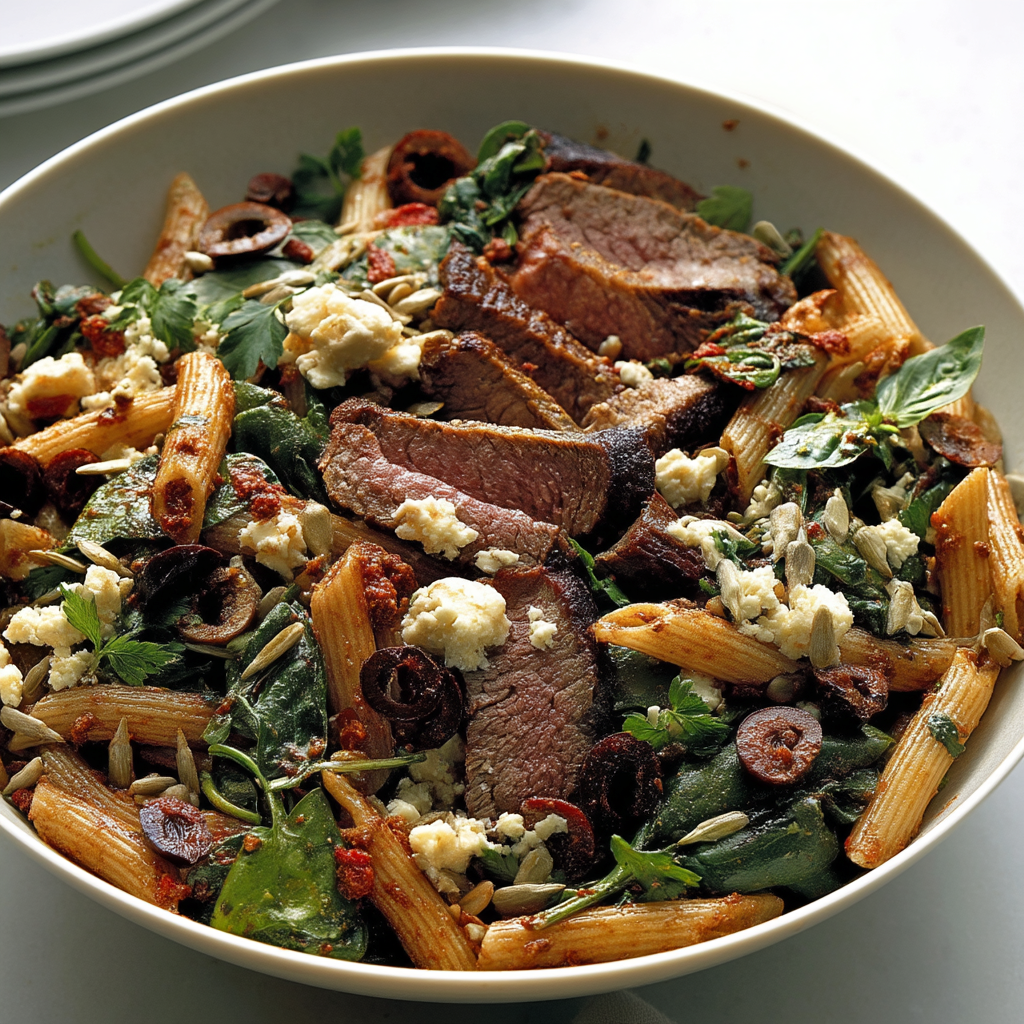
Conclusion
This Greek pasta salad with steak offers a practical and substantial lunch option by moving away from the typical chilled salad format. Using whole wheat penne, seared rib-eye, and a flavor-dense sun-dried tomato pesto, it provides a well-balanced meal that can be prepared in about 35 minutes. By following the specific skillet sequence and adding the fresh mix-ins off the heat, you ensure a final dish that remains textured and satisfying. This warm salad approach is a reliable method for anyone needing a high-protein pasta lunch.
Print
Greek Pasta Salad with Steak and Feta
- Total Time: 35
- Yield: 4 servings
- Diet: Omnivore
Description
A hearty warm salad combining tender whole wheat penne, seared rib-eye steak, and Mediterranean flavors like sun-dried tomato pesto, crumbled feta, and black olives. This 35-minute meal balances fiber, protein, and savory herbs for a satisfying lunch.
Ingredients
8 ounces whole wheat penne pasta
2 tablespoons extra-virgin olive oil
2 tablespoons butter, divided
1 pound beef rib-eye steak
1/4 cup chopped shallots
1 teaspoon minced garlic
1 tablespoon soy sauce
1 cup chopped fresh spinach
1/2 cup sun-dried tomato pesto
1/2 cup sliced black olives
1/2 cup crumbled feta cheese
3 tablespoons sunflower kernels
1 tablespoon chopped parsley
1 teaspoon basil
Instructions
Bring a large pot of lightly salted water to a boil.
Cook whole wheat penne for 8-10 minutes until tender-al-dente.
While pasta cooks, heat 1 tablespoon olive oil and 1 tablespoon butter in a skillet over medium-high heat.
Sear the steak until medium-rare, 5-6 minutes per side. Add shallots, garlic, soy sauce, and remaining 1 tablespoon butter to the skillet.
Slice the steak into strips and set aside with the pan juices.
Once pasta is cooked, drain and add to the skillet with the remaining pesto, olives, spinach, and feta.
Toss gently until greens wilt and feta softens slightly.
Transfer to a bowl, top with steak strips, sunflower kernels, parsley, and basil.
Serve immediately.
Notes
Use a thicker steak for extra flavor and moisture.
Swap sun-dried tomato pesto with roasted red pepper pesto if preferred.
To store, refrigerate ingredients separately and reheat steak before serving.
- Prep Time: 10
- Cook Time: 25
- Category: Lunch
- Method: Stir Frying, Cooking
- Cuisine: Greek


